 Capolla
If you’ve spent any time on social media in the last 24 hours, you’ve seen the headlines: “Claude has been leaked.” The framing makes it sound like the AI itself has been cracked open — its intelligence exposed, its secrets laid bare for competitors to copy. That’s not what happened. But what did happen is genuinely significant, and most of the coverage is getting critical details wrong.
Let’s fix that.
Claude vs. Claude Code: The Distinction That Changes Everything
Before we go any further, we need to separate two things that share a name but are fundamentally different products.
Claude is Anthropic’s AI model — the large language model containing billions of parameters that produces the reasoning, conversation, and code generation you interact with through the chat interface or API. Think of it as the engine.
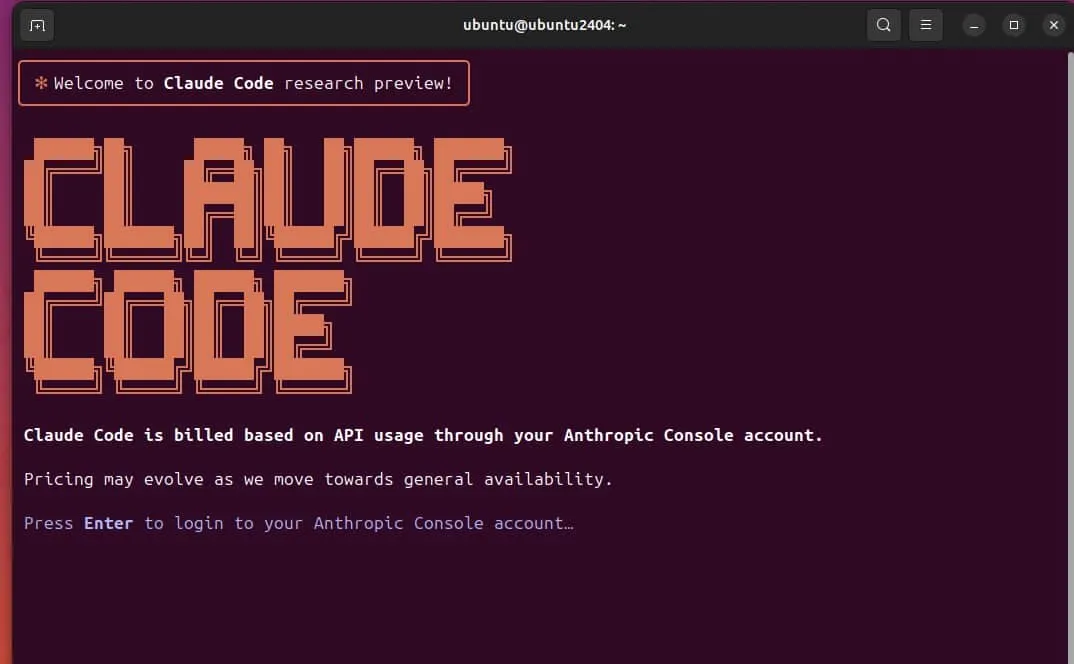
Claude Code is a command-line tool that software developers use to interact with Claude while writing code. It’s a developer’s workbench: a specialized interface that manages file editing, command execution, codebase navigation, and multi-step workflows. Think of it as the dashboard, steering system, and transmission built around that engine.
What leaked on March 31st, 2026 was Claude Code — the tool, the wrapper, the harness. Not the AI model. Not the model weights. Not the training data. Not your conversations.
That distinction is the single most important thing to understand about this incident, and it’s the one most people are getting wrong.
How It Happened: A 59.8 MB Mistake
The leak traces back to a routine software update. Version 2.1.88 of the @anthropic-ai/claude-code package was pushed to npm — a public registry that developers use to download and update software packages. Bundled inside that update, accidentally, was a 59.8 megabyte JavaScript source map file.
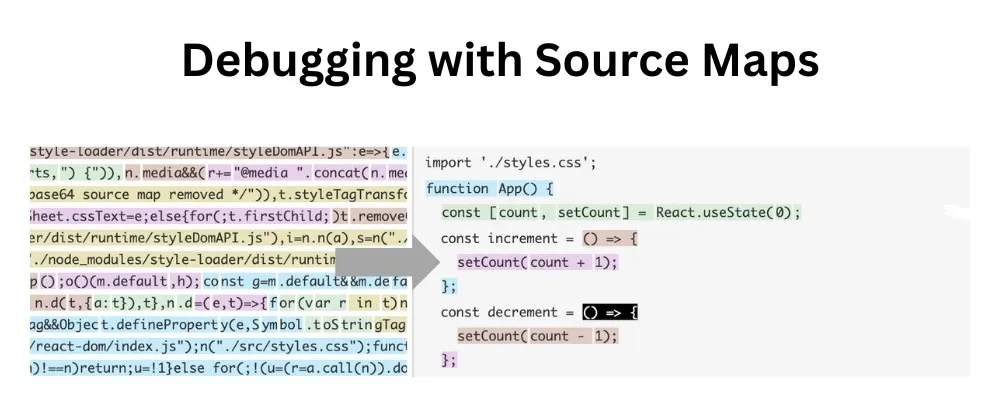
If you’re not a developer, here’s what that means. When companies ship software, they typically compress and scramble their code into an unreadable format — a process called “minification.” This makes the files smaller and the source code harder for outsiders to read. But to debug problems internally, engineering teams use source map files that translate that scrambled output back into the original, human-readable code. These files are internal tools. They are never supposed to ship to users.
This one did.
By 4:23 AM ET, security researcher Chaofan Shou had spotted the file, realized it pointed to a zip archive sitting on Anthropic’s own cloud storage, and posted about it on X. Within hours, the complete codebase — roughly 512,000 lines of TypeScript across 1,900 files — had been mirrored across GitHub, forked thousands of times, and was being picked apart by developers worldwide.
Anthropic pulled the package and began issuing DMCA takedowns, but by then the code was everywhere. The original GitHub uploader eventually replaced the repository with a Python rewrite, citing legal concerns about hosting Anthropic’s intellectual property.
Clearing Up the Myths
The speed at which this story spread also accelerated the misinformation. I’ve had clients calling to ask whether they should “shut down the AI” and rotate their API keys. If that sounds familiar, here are the biggest myths — and the reality.
“Anthropic was hacked!”
No. Nobody broke into anything. This was a build configuration error — the digital equivalent of accidentally emailing an internal document to an all-company mailing list. A source map file that should have been excluded from the npm package wasn’t. Anthropic confirmed it publicly: a release packaging issue caused by human error, not a security breach.
“Your data is compromised if you use Claude!”
No. Zero customer data, credentials, or personal information was part of this leak. What was exposed is the source code for a developer-facing command-line tool. Not the AI model itself, not your conversations, not your API keys, and not any backend infrastructure.
“Claude’s AI brain has been exposed — competitors can copy it!”
Not quite. What leaked is what the industry calls the “harness” or “agentic scaffolding” — the engineering layer that manages how Claude Code handles context, memory, tool use, and multi-step workflows. It’s sophisticated and proprietary, and it does represent significant intellectual property. But the core AI model — the weights, the training data, the fundamental intelligence — was not exposed. Competitors gained a blueprint for how to build a production-grade coding agent interface. They did not gain the ability to replicate Claude’s underlying intelligence.
“Someone inside Anthropic is leaking on purpose!”
This is the conspiracy theory gaining the most traction, and it’s understandable why. This is Anthropic’s second source map mistake in roughly 13 months (the first occurred in February 2025), and it came just five days after a separate CMS misconfiguration exposed approximately 3,000 internal files, including details about an unreleased model codenamed “Mythos.” Two significant accidental disclosures in one week looks suspicious.
But the pattern points more convincingly toward operational growing pains. Anthropic has scaled from a research startup to a company with a reported $19 billion annualized revenue run rate in a remarkably short time. Rapid scaling creates exactly these kinds of process gaps — and a deliberate leak would be a baffling strategy for a company preparing for an IPO, where the last thing you want is questions about your operational security.
What Was Actually Inside: The Technical Deep Dive
For those who want to understand what the leaked code actually reveals, here’s what developers found when they dug through those 512,000 lines.
A Three-Layer Memory Architecture
One of the most technically impressive findings was Claude Code’s approach to what developers call “context entropy” — the tendency for AI agents to become confused or lose coherence during long working sessions. Rather than storing everything in a single growing context, Claude Code uses a layered system.
At its center is a lightweight index file called MEMORY.md that stores short pointers (roughly 150 characters each) to where actual knowledge lives — not the knowledge itself. Topic-specific details are distributed across separate files loaded only when needed. Raw session transcripts are never fully reloaded into context; they’re searched for specific identifiers when required.
Critically, the system follows a “strict write discipline” where the agent only updates its index after a successful operation, preventing failed attempts from cluttering its working memory. The result is an agent that stays coherent over long, complex coding sessions — a problem that has plagued competing tools.
KAIROS: The Always-On Background Agent
Perhaps the most significant unreleased feature is codenamed KAIROS — referenced over 150 times in the source. Named after the ancient Greek concept meaning “at the right time,” KAIROS represents an autonomous daemon mode where Claude Code operates as a persistent background agent rather than a reactive tool that only works when prompted.
Within KAIROS is a process called “autoDream” — a background memory consolidation engine that runs as a separate subagent while the user is idle. The dream agent merges observations from recent sessions, removes contradictions, and converts tentative insights into verified facts. It gets read-only access to the project (it can look but not modify), and runs through a gated trigger system designed to prevent both over-dreaming and under-dreaming.
A companion feature called ULTRAPLAN offloads complex planning to a remote cloud session with up to 30 minutes of dedicated reasoning time. The implication: Anthropic is building toward AI coding agents that don’t just respond to requests, but proactively improve their own understanding of your project between sessions.
Anti-Distillation Defenses
The code revealed two mechanisms designed to prevent competitors from training their own models by recording Claude Code’s API traffic — a practice known as “distillation.”
The first injects decoy tool definitions into API requests. If someone is recording the traffic to use as training data, the fake tools corrupt that dataset. The second summarizes Claude’s reasoning between tool calls and returns only those summaries with cryptographic signatures, so anyone eavesdropping captures condensed versions rather than the full chain of thought.
Multiple developers noted that both mechanisms could be circumvented relatively easily — leading several commentators to conclude that Anthropic’s real protection against distillation is legal, not technical.
Undercover Mode
The most controversial discovery. A module called undercover.ts implements a mode that strips all traces of AI involvement when Claude Code contributes to public open-source repositories. The system prompt explicitly instructs the model not to mention internal codenames, AI attribution, or any indication that the code was AI-generated.
The intended purpose appears to be protecting Anthropic’s internal information when employees use Claude Code on public projects. But the broader implication — that AI-authored contributions to open-source projects could be systematically unlabeled — sparked heated debate across developer forums, with critics arguing it represents a form of systematic deception.
The irony was not lost on the community: Anthropic built an entire subsystem to prevent internal information from leaking into external contexts, then leaked everything through a packaging oversight.
Internal Model Roadmap
The code also exposed internal model codenames and performance data that Anthropic never intended to make public. “Capybara” refers to a Claude 4.6 variant already in its eighth iteration. “Fennec” maps to Opus 4.6. “Numbat” remains in prelaunch testing with a comment in the code reading “Remove this section when we launch numbat.” Internal benchmarks for the latest Capybara version showed a false claims rate of 29-30% — a regression from the 16.7% rate in an earlier iteration — alongside an “assertiveness counterweight” designed to prevent the model from being too aggressive in code refactoring.
For competitors, these metrics provide a rare benchmark of the current ceiling for agentic AI performance.
A Separate But Related Threat: The axios Supply-Chain Attack
One critical detail that’s been underreported: a separate supply-chain attack on the axios npm package occurred within hours of the leak, between 00:21 and 03:29 UTC on March 31st. This is unrelated to Anthropic’s packaging error, but the timing means developers who installed or updated Claude Code via npm during that window may have pulled in a malicious version of axios containing a Remote Access Trojan.
If you installed Claude Code via npm on March 31st, check your lockfiles for axios versions 1.14.1 or 0.30.4, or the dependency plain-crypto-js. If found, treat the machine as compromised, rotate all credentials, and consider a clean OS reinstallation. Going forward, Anthropic recommends their native installer over npm.
What This Actually Means
This is an embarrassing but ultimately manageable incident. Your data is safe. The AI models are intact. The biggest impact is strategic — competitors now have a detailed blueprint for building a production-grade AI coding agent, and a preview of Anthropic’s unreleased product roadmap.
For Anthropic specifically, the reputational damage compounds at a sensitive moment. With $2.5 billion in annualized revenue from Claude Code alone, 80% from enterprise clients, and a reported IPO on the horizon, two exposures in one week undermines the “safety-first” brand that is their core differentiator. Enterprise customers pay partly for the confidence that their vendor’s technology is proprietary and protected.
For the broader AI ecosystem, the leak accelerates a conversation already underway: when the orchestration architecture is no longer secret, differentiation moves entirely to model capabilities and user experience. The harness can be studied and replicated. The engine cannot.
The AI industry is moving at unprecedented pace. Mistakes like this remind us that even the most well-funded companies are still building the plane while flying it — and that operational maturity needs to scale as fast as the technology itself.
What’s Your Take?
Would incidents like this change how you evaluate an AI vendor’s security posture? Are these inevitable growing pains at a company scaling at breakneck speed, or a sign of deeper operational concerns?
I’d love to hear from others working in AI adoption and enterprise AI strategy.