 Capolla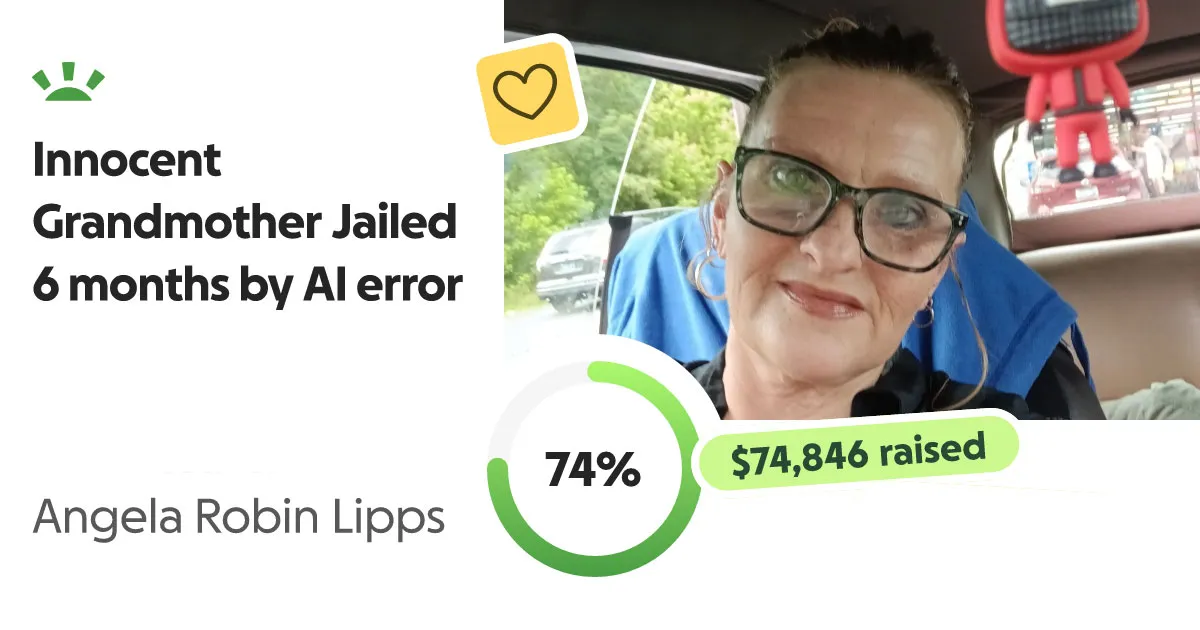
On July 14, 2025, Angela Lipps was arrested at her home in Tennessee. The charges were for bank fraud committed in Fargo, North Dakota, over 1,000 miles away, in a state she says she had never visited. The key evidence linking her to the crimes was a match produced by an AI facial recognition system.
She would spend more than five months in jail before the charges were dismissed. Her first time on an airplane was being extradited in handcuffs.
This is not a story about AI going rogue. It’s a story about what happens when organizations adopt AI tools without governing how those tools’ outputs move between teams. And if you work in AI adoption at any level, the failure pattern should feel uncomfortably familiar.
What Happened to Angela Lipps
In the months before Lipps’ arrest, several instances of bank fraud had occurred in and around Fargo, North Dakota. Investigators needed a suspect. A neighboring agency, the West Fargo Police Department, had quietly purchased its own AI-powered facial recognition system, Clearview AI, a startup that maintains a database of billions of photos scraped from the internet, including social media.
West Fargo’s system flagged Angela Lipps as a potential match based on a fake ID used in one of the fraud cases. That result was shared with Fargo Police Department detectives, who were leading the investigation.
Here’s where the breakdown begins.
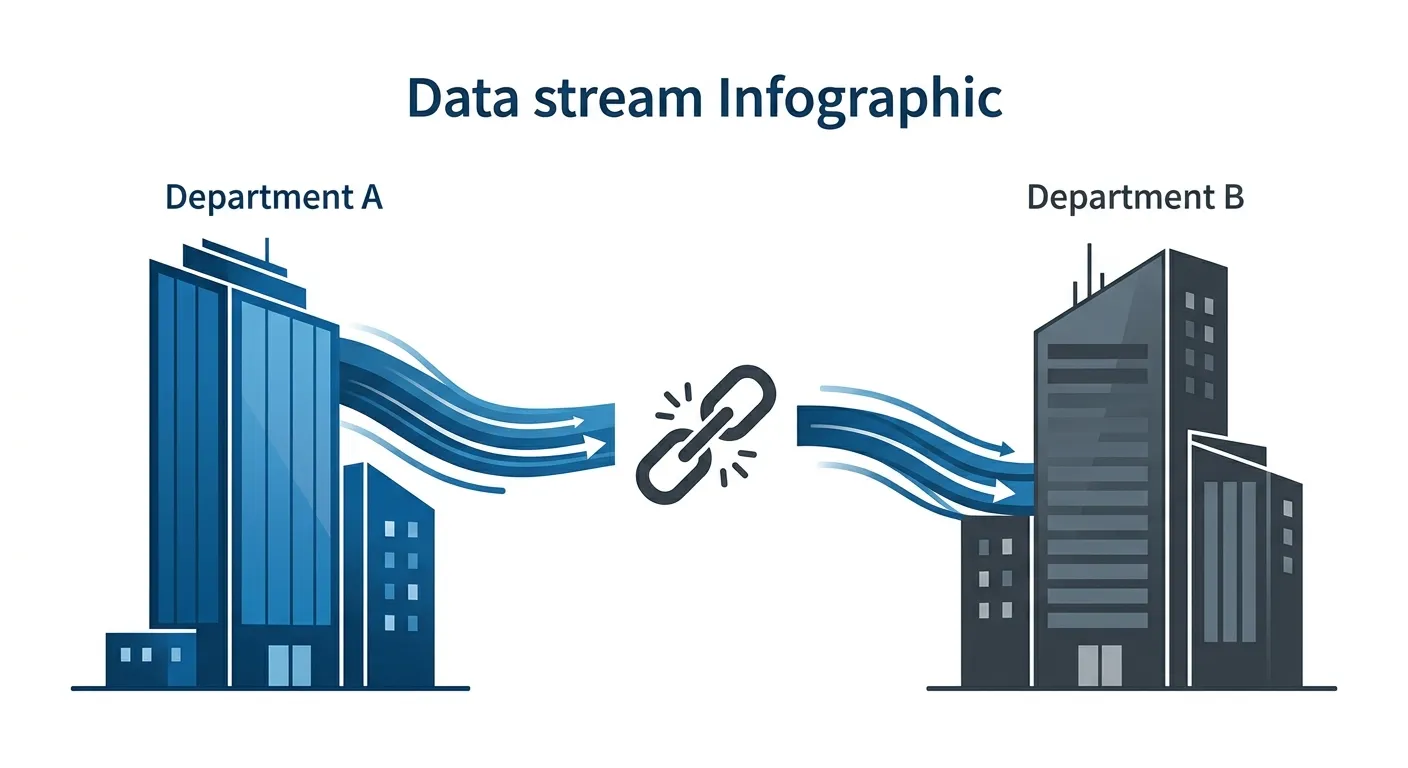
Fargo’s police chief later acknowledged that his department’s leadership didn’t even know West Fargo had purchased the facial recognition tool. When the AI match was passed to Fargo detectives, they assumed it had been cross-referenced with surveillance footage from the fraud cases. It hadn’t. No one documented what the AI had actually analyzed. No one verified the handoff. And critically, no one performed what should have been the most basic investigative step: checking whether Angela Lipps had ever set foot in North Dakota.
Bank records placing her in Tennessee during the entire period of the alleged crimes were readily available. No one looked.
A warrant was issued. She was arrested, held for months in Tennessee before being extradited, and didn’t see a Fargo courtroom until October. It wasn’t until a public defender pulled her bank records and produced what the State’s Attorney’s Office called “potential exculpatory evidence” that the case began to unravel. The charges were dismissed on December 23. She was released on Christmas Eve.
The Governance Failure, Not the Technology Failure
It would be easy to frame this as a story about AI being unreliable. But that misses the more important lesson.
The facial recognition system did what facial recognition systems do: it produced a probabilistic match. It flagged someone with similar features. That’s an investigative lead, not a conviction. The tool itself comes with well-documented limitations and is designed to be one input among many.
The failure wasn’t in the algorithm. It was in everything that happened after the algorithm produced its output.
Fargo’s police chief put it plainly when addressing the situation: the department would no longer use information from West Fargo’s AI system because it was their system, and Fargo didn’t know how it was run or how it was overseen.
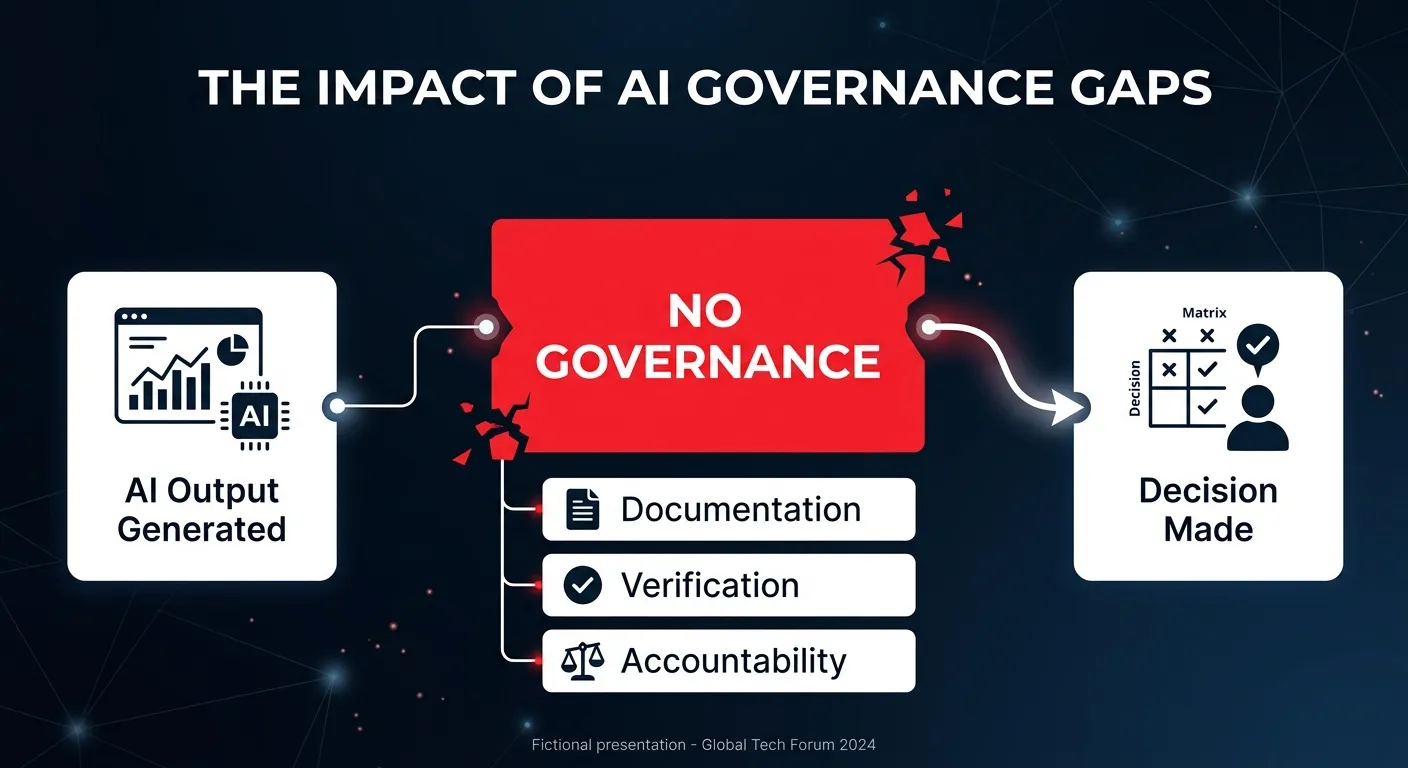
That single statement captures the entire governance problem. One department generated an AI output. Another department consumed it as a trusted input. Nobody governed the space in between.
This Is Happening Inside Your Company Right Now
If you strip away the law enforcement context, the failure pattern in the Lipps case maps directly onto what’s happening inside companies that have begun adopting AI without centralized governance.
One department adopts an AI tool without executive awareness. West Fargo purchased Clearview AI independently. Fargo’s leadership had no visibility into the decision. In enterprise settings, this is textbook shadow AI: a team purchases or integrates an AI tool to solve a local problem, without informing IT, compliance, or leadership. A 2024 study found that over 60% of employees using AI tools at work were doing so without explicit organizational approval.
Outputs get passed to another team as trusted inputs. The AI match was shared with Fargo detectives as actionable intelligence. In a corporate context, this looks like a marketing team passing AI-generated customer segments to sales, or an operations team feeding AI-driven forecasts into executive planning, without disclosing the methodology, confidence levels, or limitations of the model that produced them.
Nobody documents what the model did. There was no record of what images the AI compared, what confidence threshold triggered the match, or what other potential matches were considered and discarded. Inside companies, this manifests as AI-generated reports, recommendations, and analyses flowing through organizations with no audit trail of how they were produced.
The receiving team assumes the upstream work was thorough. Fargo detectives assumed the AI output had been validated against surveillance footage. It hadn’t. In business, downstream teams routinely trust upstream AI outputs because they arrive in polished formats, as dashboards, as scored leads, as automated summaries, that signal completeness and reliability, regardless of whether that reliability has been verified.
A high-stakes decision gets made on a foundation no one fully understood. An arrest warrant was issued. In a corporate setting, these decisions might be a product launch, a hiring decision, a market entry, or a financial forecast presented to the board. The stakes vary. The structural vulnerability is identical.
The Cross-Department Communication Problem
One of the most underreported aspects of the Lipps case is how many handoff failures compounded on top of each other. It wasn’t just the AI output that moved between departments without governance. The entire chain of custody broke down.
After Lipps was arrested in Tennessee, it took months before Tennessee law enforcement formally communicated with North Dakota authorities about her extradition status. Fargo police later said they couldn’t determine whether the delay was procedural or because Lipps contested extradition. The police chief acknowledged there wasn’t even a reliable mechanism for the Cass County State’s Attorney’s Office to notify them when someone arrested on their warrant entered custody.
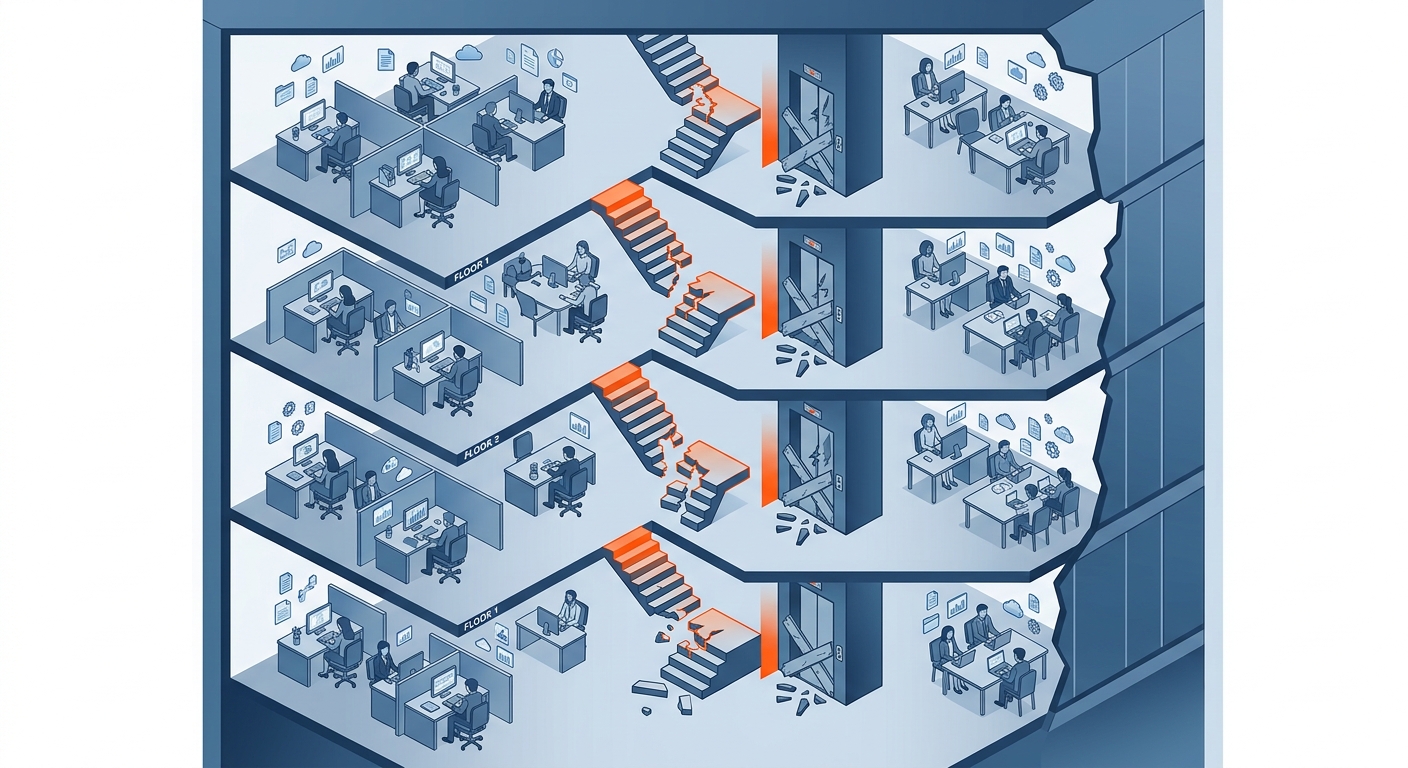
This is where the parallel to enterprise AI adoption becomes especially pointed. In most organizations, the AI governance conversation focuses narrowly on the model itself: is the model accurate? Is it biased? Is it compliant? These are important questions, but they ignore the more common failure mode: what happens when AI-generated outputs move between teams, departments, or systems that don’t share documentation standards, validation protocols, or even awareness of each other’s tools?
The most dangerous assumption in any AI-integrated organization isn’t that the AI is wrong. It’s that someone else already checked.
What Governance Actually Looks Like
The Fargo Police Department’s response to the Lipps case offers a useful, if incomplete, template for what governance corrections look like in practice.
They cut off the ungoverned data source, announcing they would no longer use information from West Fargo’s independently operated AI system. They rerouted facial recognition work through a certified state-level intelligence center with proper training and oversight. They instituted monthly reporting of all facial recognition identifications to the Investigations Division commander. And they began exploring daily booking roster reviews to close the communication gaps that allowed Lipps to sit in custody without anyone in Fargo knowing.
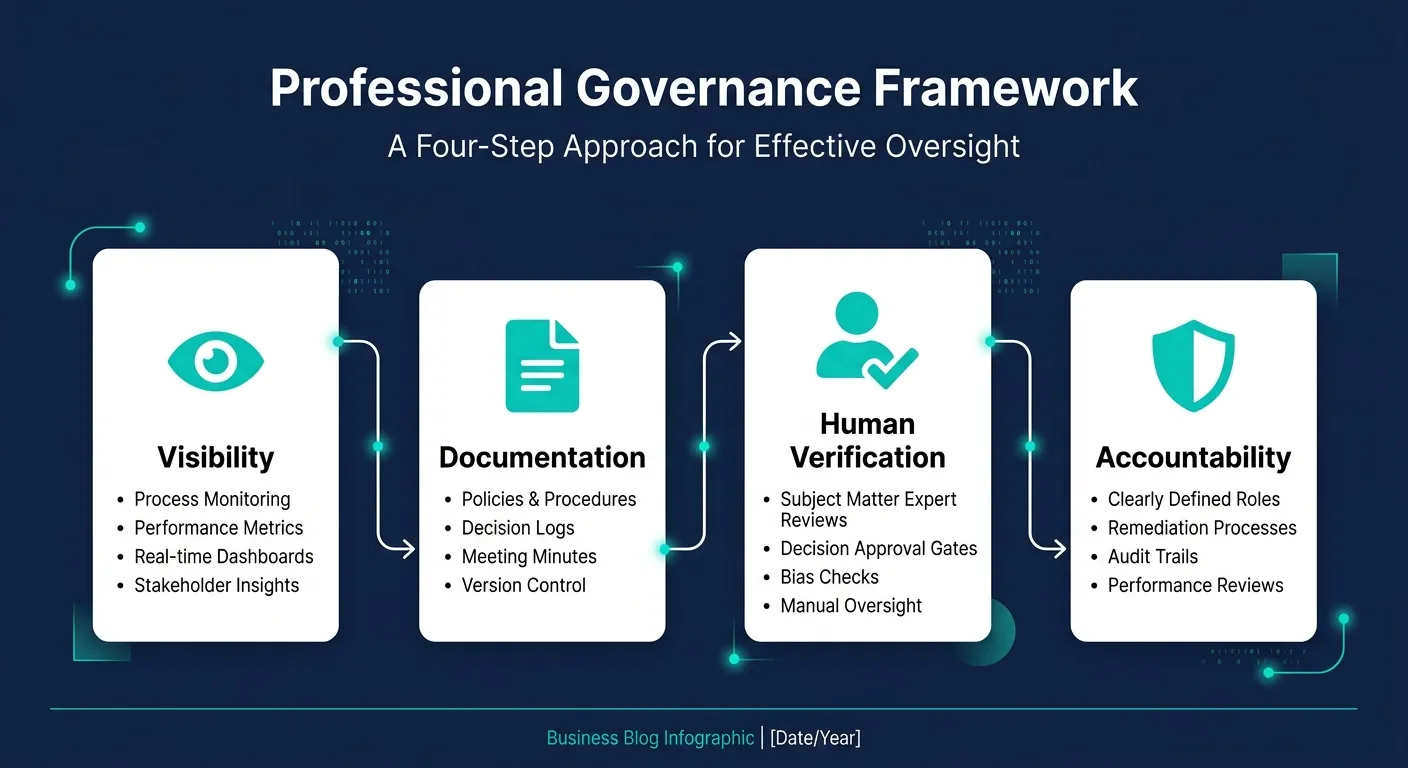
These are reactive measures, but they map to the same governance principles any organization should apply proactively when integrating AI across departments:
Visibility. Leadership must know what AI tools are in use across the organization. If a department can adopt a tool that generates outputs consumed by other teams, and leadership doesn’t know it exists, you have a governance gap that no policy document can fix.
Documentation at the handoff. When AI-generated outputs move from one team to another, they must carry metadata: what model produced this, what data it analyzed, what its confidence level is, and what it didn’t check. The output alone is never enough.
Human verification checkpoints. Every AI output that feeds into a consequential decision needs a defined point where a human validates it against independent evidence. In the Lipps case, that checkpoint would have been a detective spending five minutes checking whether the suspect had ever been to North Dakota. In a business context, it might be a data analyst verifying an AI-generated forecast against historical actuals before it reaches the boardroom.
Accountability ownership. Someone must own the handoff. Not the AI. Not the upstream team. Not the downstream team. A named role or function that is accountable for ensuring that AI outputs are properly documented, validated, and fit for purpose before they inform decisions.
The Stakes Are Already High
Angela Lipps lost more than five months of her freedom. Her attorneys have described the lasting trauma, reputational damage, and loss of liberty she endured. Her legal team is exploring civil rights claims. She has said she will never return to North Dakota.
Most AI governance failures in business won’t result in someone being jailed. But the structural pattern, an ungoverned AI output moving between teams without documentation, verification, or accountability, produces its own damage: bad decisions built on untrusted data, eroded confidence in AI initiatives, regulatory exposure, and the kind of slow organizational harm that compounds quietly until it becomes a crisis.
The technolougy didn’t fail Angela Lipps. The absence of governance around it did.
That’s the lesson, whether you carry a badge or a business card.
The details of Angela Lipps’ case are drawn from CNN’s reporting published March 29, 2026. You can donate to her GoFundMe here